Sunday, August 14, 2022

Giving People a Hard Time is Hardly Worth It


I've had some misunderstandings occur this week: things I did not clearly understand regarding what others were expecting, and things that others did not clearly understand regarding what I was expecting. After an interaction between the CEO and myself left him frustrated with my recommendation, my supervisor intervened. She pulled me aside and explained to me the merits, and imperative, of resonance, defined as the quality in a [sound] of being deep, full, and reverberating. Somewhere along the way, social psychologists, adopted the term and replaced sound with dialogic resonance. The key strategy that my supervisor cited for me to work on was repeating back what was said to arrive at clarity around expectations and to build mutual respect in conversations.

I'm appreciative that this insight occurred on the coattails of a key insight gleaned from EL's July Issue, Nurturing Well-Being in schools, Fixing Your School's Well-Being Ecosystem. I knew from the moment I read this piece that it was going to be in my reflection this week:

Spread Blameless Discernment

Acknowledge openly that we all play the blame game. When things go wrong, we blame ourselves, others, circumstances, or some combination of the three. But getting to a "better normal" will require what's often referred to as blameless discernment. Muster as much objectivity as you can to ascertain what is really happening rather than simplistically attributing the problems to one person, group, or circumstance. And even if practices a particular group tends to follow do seem to be part of where things have gone off-track, frame this discovery in terms of where to start solutions rather than pointing fingers.

Is your default, "If I were a better leader, my teachers would be OK" or "If the teachers would just act like adults …" or "Once the pandemic is over, ___ won't be an issue"? These are examples of blaming oneself, others, or circumstances. Each may hold part of the truth, but the root problem—and solutions—are likely more nuanced, and you can't solve the root problem unless it's correctly identified.

As you shift organizational norms and practices to help everyone reclaim their energy, collaborate with key colleagues to use blameless discernment to understand how you got to where you are, what needs to change, and how to best lead that change. Questions that can help you adopt this mindset include, "What might an observer new to our situation point out about how we got to where we are?" "What data might we examine to confirm or dismiss our assumptions?" and "Are we failing to see our own blind spots or failing to step into the shoes of others to better understand their needs or actions?"

In a conversation with a colleague this week we resonated that emotions matter. And as I kept at more fully understanding what lay in the resonating insights I was capturing, I discovered both how essential they are to highly functioning teams and organizations AND how deficient I am in creating resonance. In fact, it is often enough the case that I am at the root of ill feelings. After a week of navigating heightened negative emotions, I am receptive to the message that blame and assumptions are not only unnecessary but may be increasingly counter-productive. Having conversations, with the disposition of spreading blameless discernment as described above, is impetus for highly productive resonating discourse (see: Leverage High EI Conversations).

I am grateful for this week's insights because I think they are going to serve me well in the coming years, both at work and at home. More that that, they are going to serve others well, my wife and family included. Sorry if I gave you a hard time, honey. :) 

Further Reading:


Thursday, August 4, 2022

Possible, Plausible, Probable

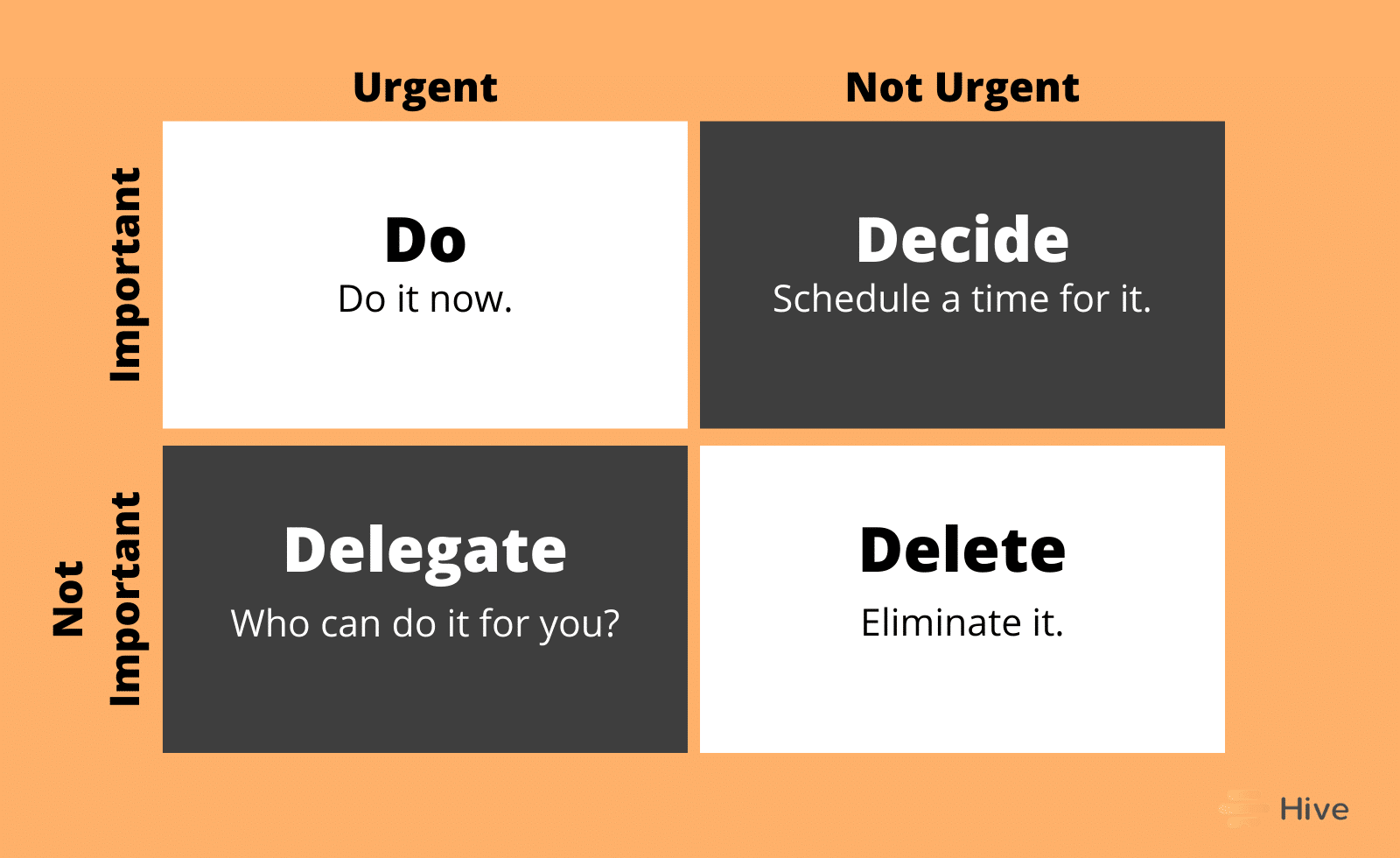
The area in which I need the most growth is delegation. I am fortunate. I have a partner and employee who can support our work. However, we are pretty much day-to-day right now. I have a long term vision, but I am trying to navigate us muscling through immediate and urgent needs. And each day seems to bring new unforeseen challenges. No doubt some of these items can alter: I got a message from a colleague today with a plan to do a workaround that could buy us weeks of time to prepare for digital onboarding of our instructional systems. The key is to constantly assess and evaluate and prioritize, but do so within the context of a larger plan and goals. I think the next step that our team is ready for is for me to share my formal and linear prep document that I share with my direct supervisor which I have been working on for weeks. It serves for me as a model of the process. Going from good to great happens by parts and in phases. It is iterative. There is a constant reflective process where the frontier space is experienced as fresh and exciting along the way. This kind of positivity can only be found if we have the faith to move forward, step by step, in that what we need to accomplish is possible, plausible, probable.

https://www.calendar.com/blog/how-to-catch-up-on-work-when-youre-behind/#:~:text=Take%20a%20short%20break%20of,you%20can't%20figure%20out


https://www.forbes.com/sites/theyec/2021/08/18/falling-behind-on-work-take-these-steps-to-get-back-on-track/?sh=5cda4c2434be

Sunday, July 31, 2022

Find the Easy Best Way


I've been working hard to understand the best way to move forward with the dashboarding for the E-Team. And it must not be overlooked, that when you resolve the best way, you must also then search out the easiest way. It is possible to build out a beautiful dashboarding system in Tableau, however, doing so would necessitate sluggishness on making updates. In addition, I am still very novice in Tableau dashboarding. The path that allows for the most flexibility in dashboard development is a simple spreadsheet dashboard system. While we are making our Objectives and Key Results (OKRs), resolving our Key Performance Indicators (KPIs), and aligning our strategic plan in conjunction with Attuned, I became more and more convicted that a spreadsheet system will be the most effective in that it is easily manipulable and can still making beautiful and simple visualizations. It may be that the year to year ETeam dashboarding is always maintained at spreadsheet level to allow for quarter by quarter updating of our OKRs to ensure we are making good on our mission and vision. This strategy also fits well within my burgeoning framework of lessening time spent on systems training by using Google native systems.


"Choose a Lazy Person To Do a Hard Job Because That Person Will Find an Easy Way To Do It" ~Bill Gates


 https://www.cnbc.com/2019/02/15/the-science-backed-reason-lazy-people-are-smarter-more-successful-and-better-employees.html 

https://quoteinvestigator.com/2014/02/26/lazy-job/

Sunday, July 17, 2022

Persuasion -> Commitment -> Persistence -> Determination

I began the week thinking about commitment, how you have to be committed if you are going to accomplish anything meaningful. But then I began to think about, "well, what comes before commitment… and what comes after". As I thought it through and did a little web searching, I arrived at the above continuum, if it could be called such a thing. The critical piece for me in supporting Jeannine, and the larger team, is what order do I install systems that keep us unflaggingly pursuant of our collective vision. In other words, what systems keep us on mission?


Of course, this has me thinking about all manner of efficiency, from "ways of work" inherent to the KIPP ways of doing things (O3, Relay Protocols, Tableau, etc), to the more high level mechanisms of collaboration like Gantt Charts, Naming Conventions, and Documentation. 


The tricky thing is that these high level systems must be established while we are in the weeds. I have to work toward getting a comprehensive data compliance calendar while right now chasing down meeting deadlines I am unaware of. Chief Brooks, in a nod to an esteemed colleague, said, "he's on the dance floor, he's on the balcony, and he's in the airplane above." And thus I fit determination into another framework, yet to be named, but clearly less horizontal… more VERTICAL!


Update: so that I knew I was on the right track with this post, Sadie and I opened a fortune cookie and the fortune read as follows:

Persistence and determination alone are omnipotent.

Of course, I had to look up the source of this most excellent fortune (theologically innacurate though it may be). Google's top and featured hit was the following:


Take a look at the screenshot. To egg me further on, as if I needed that, the article was written for the Tennessean!

If that is not persuasive, I don't know what is!!

Saturday, July 16, 2022

Overwhelmed People Overwhelm People

This Saturday morning as I'm cranking through emails and trying to do my best to be productive and get through the mound of emails I had, I got an email from my supervisor that I'm sending too many emails and that it's difficult to sort through all the information. She also sent me a "stop it and this is the last time I'm warning you email", which, of course, did not feel good. So, I paused and reflected. In honor of the 5 whys I figured I'd give it a go here:

Problem: People are confused with all of the information coming at them from varied sources
why: the information often comes without enough context, or with context that is difficult to navigate in a thread
why: the time isn't taken to organize the information by priority and context
why: there is a lot of work to do, and in order to get things off of the plate and into the realm of visibility for others to process, the expedient approach is taken
why: because I feel responsibility to keep all the things moving forward
why: because I feel that my value is wrapped up in keeping all the things moving forward. 

So, as I run through this root cause analysis, I feel that in order to be worth the money paying for me, I have to keep the engine sizzling. But if it really comes down to a value assessment of myself, then I have to re-evaluate my strategy. Sure, I am valuable if I am able to get things accomplished, however, if things are unclear or others are disgruntled, there are ways that I am working against myself and the organization. 

I know that I have to take more time to come up with a strategic plan, but it's hard to find the time to do that, and it's hard to know all the things that should be in the strategic plan when I'm still learning the things that would go into the strategic plan. What I'm going to make a point of doing from here is using my strategy document and refining according to priorities, making sure those priorities are also organizational priorities, and not just the priorities I think the organization should have. That is the way that I am working against myself. Once I've accomplished dutifully the items that organization needs me to accomplish, and have done it well, thereafter I'll be extended trust to accomplish the items that I think are the most important for us to move forward. 

There's a few captures I wanted to include for this blog. It's kind of a call and response of axioms:

Overwhelmed people overwhelm people. Pause and reflect.
Haste makes waste. Slow is smooth, smooth is steady, steady is fast. 

And here's some extra reading:

Friday, July 8, 2022

A Face with a Name: The Power of Recorded Video to Personalize Audience Experience

The pandemic has taught us that we can be flexible with structures for learning. The situation we are currently resolving is balancing the best widely accessible technology offered with a sentiment of "getting back to normal". A path must be created from now to the future. 

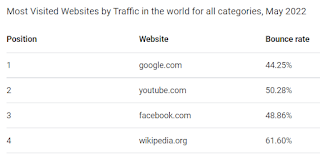
One path forward into the future domain is the simple use of video and audio. These devices can be deployed for asynchronous use, yet embody a human who invested care and time to produce them for their end users. To demonstrate the power and current utility of such a device, consider that YouTube is the 2nd most visited site on the planet behind Google. 


Services such as recording a Google Meet or using Loom (owned by Google) allow for the recording of a person to give feedback in a more human and engaging way. Consider that Google has integrated Loom for recording video into Google Chrome and Gmail, illustrating that Google is fortifying a need for users to be able to connect with audience in a way that is both personal and present. The written word, I would say, is more general and timeless, if such a scale existed. 


We often hear about the power of bringing a face with the name, which I think illustrates the power of using video (face) in conjunction with the written word (name) as an integral part of collaboration. To push the conversation into the teaching and learning domain, consider that OneNote, Google Classroom, FlipGrid and a growing amount of Learning Management Systems and Tools incorporate processes to video feedback. 

As we think about what personalization means to our students, we will find ourselves getting more personal with our own content and paths of content delivery because the technology now exists to do so.

Flowchart -> Accessibility & Sustainability in Digital Onboarding & Rostering

According to Google Support: "Diagrams and flowcharts make complex processes in your presentation easier to understand. All you have to do is add, combine, and edit shapes—no diagram software required." The DataTeam is pursuing the development of accessibility and sustainability to annual procedures using simple tools. Currently that work is focused on Digital Onboarding and Rostering. 

Digital Onboarding is the process of getting personnel credentialed and permissioned for their accounts, and includes giving capacity to personnel once they gain appropriate access. 

Digital Rostering is the process of associating students with their teachers and other hierarchical levels (ex. homeroom, grade level, 

Both of these paths are unified in that they rely on sync processes. For example, HR passes a list of new hires onto IT who generates a Google Account. That Google Account is used to make a KIPP Foundation Single Sign On account (SSO), which will sync with services KIPP Share and Tableau, and a PowerSchool account, which will sync with Clever, which will subsequently sync with services such as iReady, Illuminate, Raptor, etc. Below are examples of simple flow diagrams that can be integrated into a flowchart. This flowchart will probably be created in Google Drawings because that platform fits well with the criteria of accessibility and sustainability.

HR -> IT -> Google Account
Google Account -> KIPP Foundation SSO -> Tableau & KIPP Share
Google Account -> PowerSchool -> Clever -> iReady, Illuminate, & Raptor, etc
 
Each of these sync processes needs to be established according to the framework that exists in the system and the crux of our work right now is 
  • resolve sync processes 
  • see if they are working 
  • examine better sync pathway possibilities (ex. can iReady use Google SSO rather than Clever?). 
This brief is meant to make visible our work, and to illustrate our path through the work.  

A Change of Pace to See How the Little Things Connect to the "Big" Things

Meeting up with Ms. Hunter from Communities in Schools on arrival at KIPP Memphis @ Henry. When was the last time you said to yo...